Optiland vs Zemax: an engine cross-check
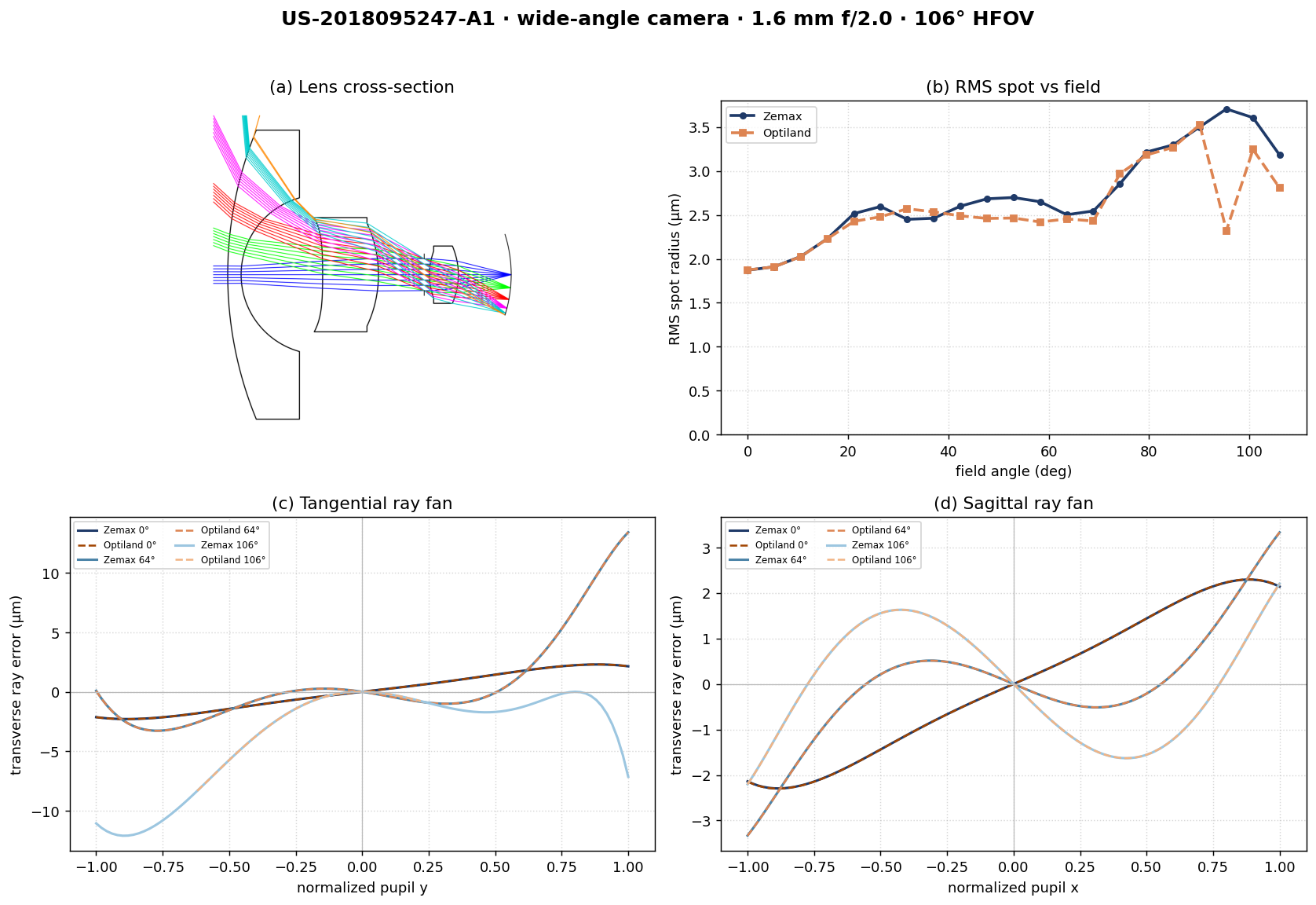
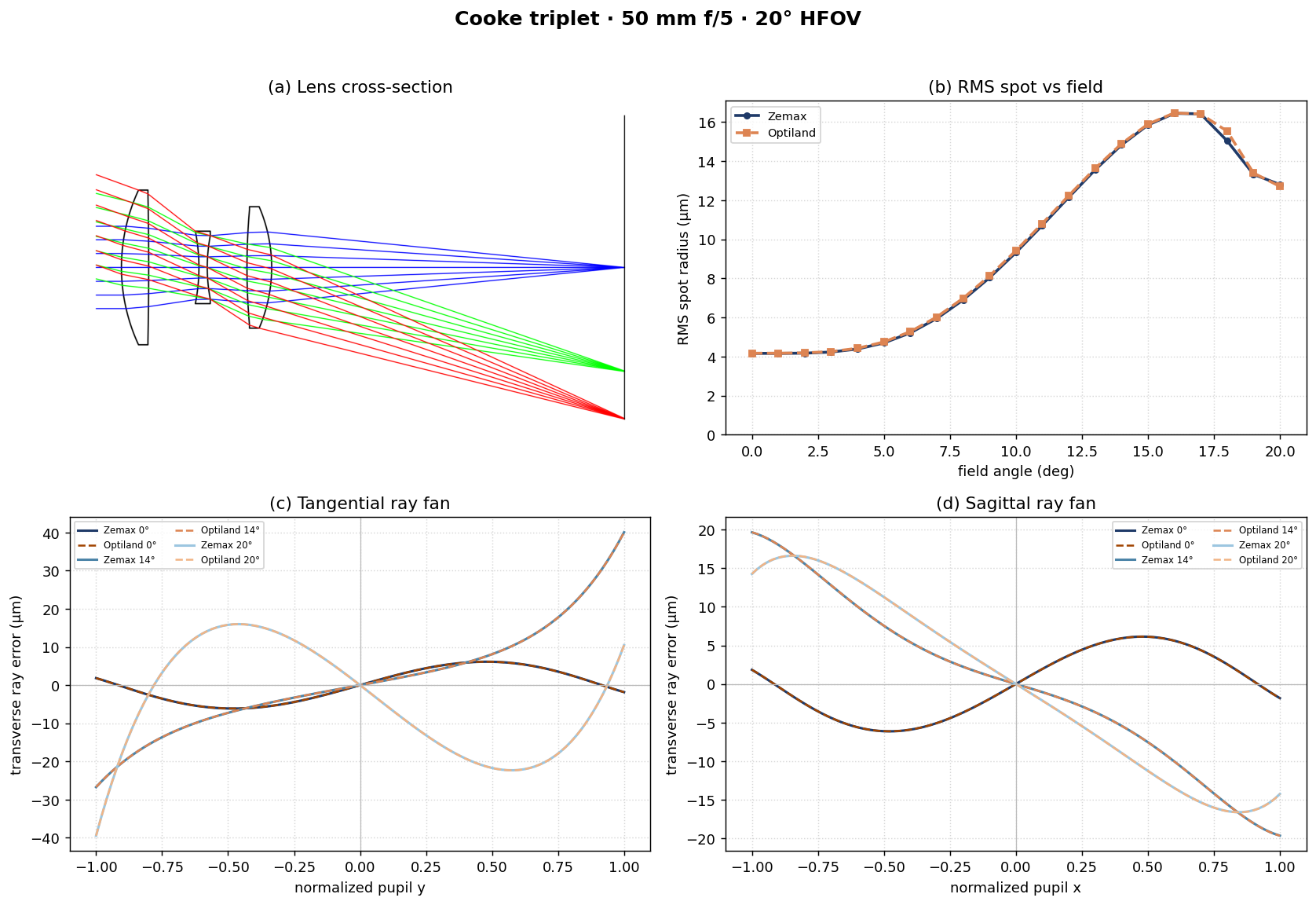
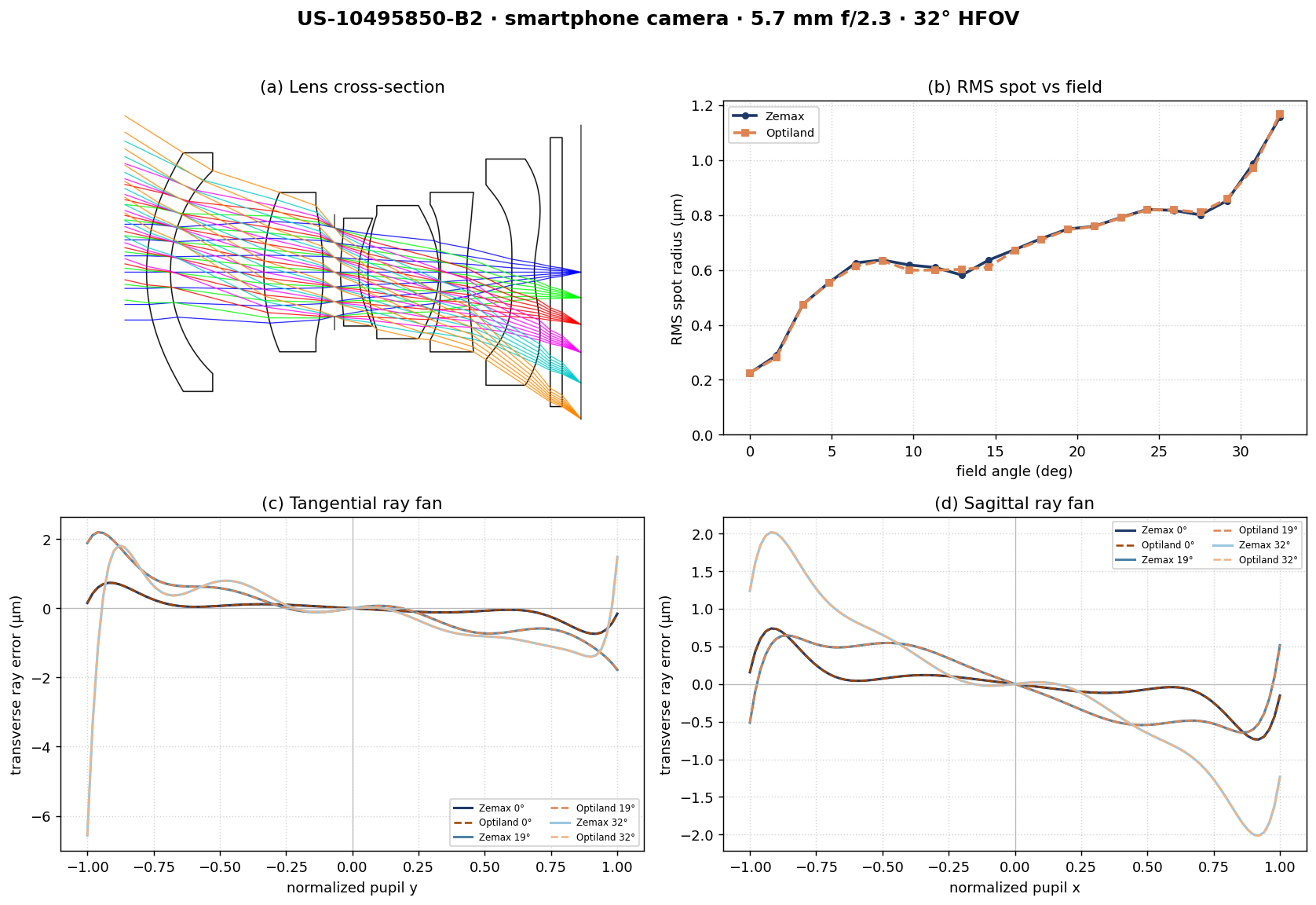
To validate our custom engine, we trace three designs in both engines: a classic Cooke triplet, a modern smartphone lens, and a wide-angle lens with a circular sensor. We use the same tracing methodology as in the rest of the corpus (sunflower-127, median-centroid, 4x-median radius). In all cases, the ray fans match Zemax to a few hundredths of a micron. RMS spots match in most cases - the differences come from two effects: (1) the same pupil coordinate maps to a slightly different real ray in each engine, which can leave the outlier filter trimming a slightly different set of rays, and (2) Optiland vignettes more rays at the far field of the wide-angle lens, causing larger differences there.
Cooke triplet
Smartphone camera
Wide angle camera
Through ~90° every ray survives in both engines and the RMS tracks to ~10 %; past that, Optiland vignettes more of the pupil than Zemax (65 of 127 rays survive at the 106° corner vs all 127 in Zemax), so the corner RMS is computed over different surviving subsets.